
The energy management system
Manual — Energy Management · chapter 5 of 13
The energy management system is the set of rules and records the company keeps to improve its energy performance: who decides, what is measured, what the targets are and what is being done. It is what Chile’s Decree 28 requires of large consumers and what ISO 50001 describes.Each company has its own system. The screen has eight tabs, which this chapter and the next three go through.
The summary
Section titled “The summary”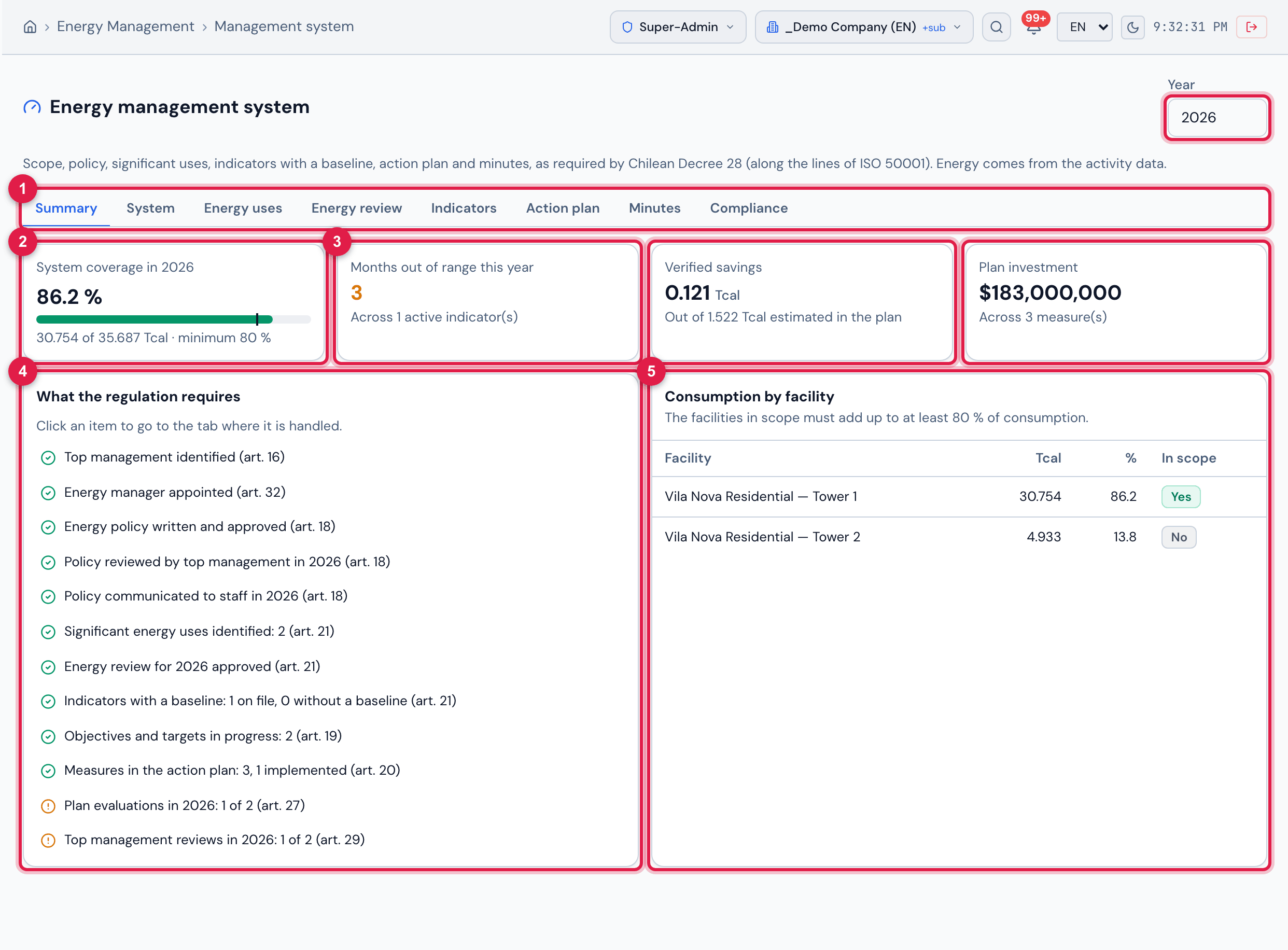
Figure 10. The Summary tab of the management system.
- 1The management system tabs and the Year.
- 2The coverage: how much of the company’s consumption is within the scope of the system. The mark shows the minimum of 80 %.
- 3Months out of range for the indicators, Verified savings and Plan investment.
- 4What the regulation requires: each item with its article. Green is fulfilled; orange needs action. Clicking takes you to the tab where it is handled.
- 5Consumption by facility, showing which ones are in scope.
The record: scope, people and policy
Section titled “The record: scope, people and policy”- On the System tab, give the system a Name and choose the Type: certified (ISO 50001) or not certified (by the regulation requirements).
- Describe the scope and the boundaries: which activities and which areas the system covers.
- Enter the Top management (names and positions) and the Energy manager, with their training or experience.
- Write the energy policy and the dates on which it was approved, reviewed and communicated to staff.
- Tick the Facilities in scope and click Save facilities.
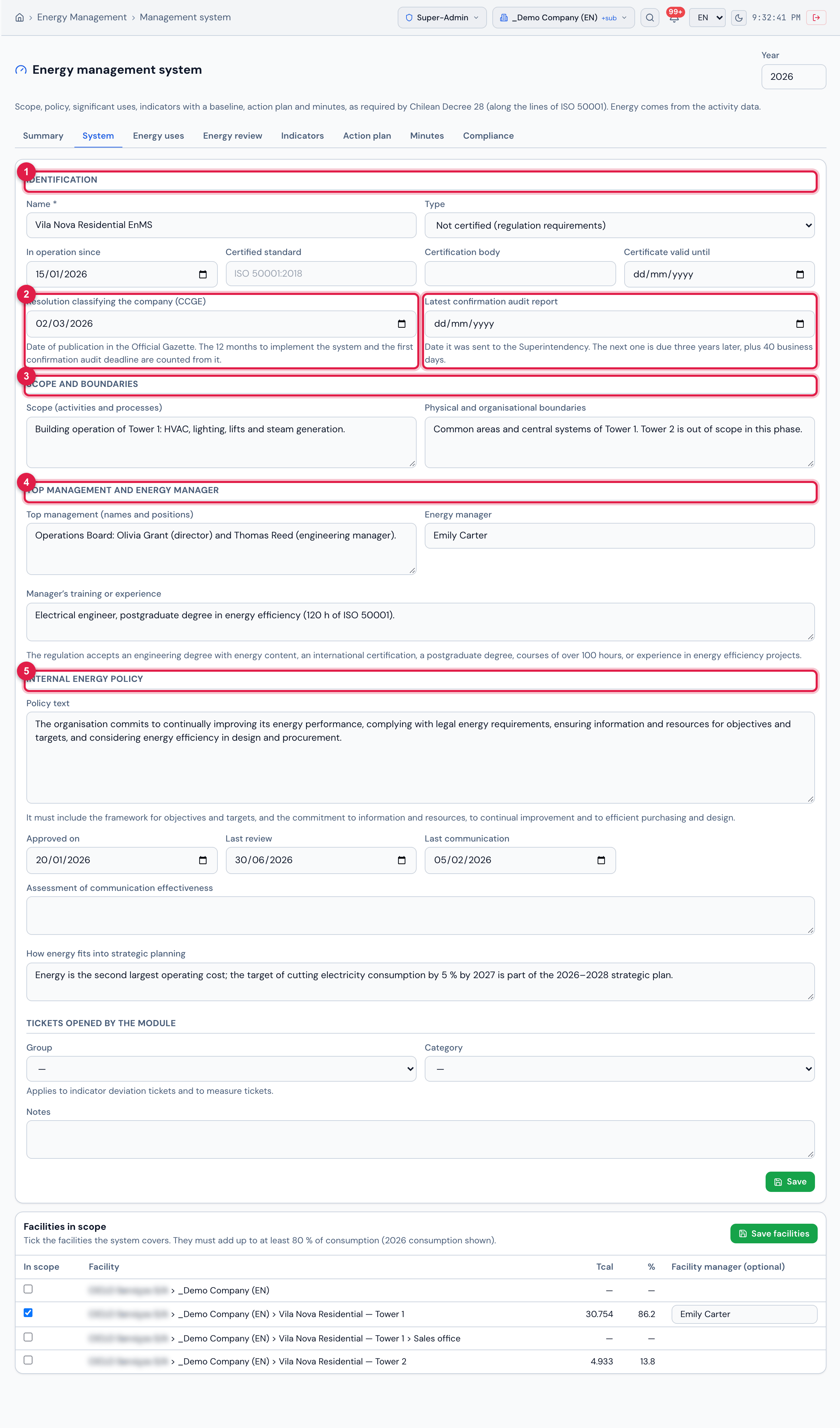
Figure 11. The System tab.
- 1Identification: name, type, start of operation and, if any, the certification.
- 2The two dates of the confirmation audit (Chile, non-certified system): that of the resolution that classified the company and that of the latest report sent.
- 3Scope and boundaries.
- 4Top management and energy manager.
- 5Internal energy policy, with the dates.
The two confirmation audit dates feed the deadline shown on the dashboard: the first audit is due 40 business days after the 12 months of implementation; the following ones, 40 business days after three years from the last report sent.
Energy uses
Section titled “Energy uses”An energy use is a system or process that consumes: the air conditioning, the boiler, the furnaces, the lighting. The significant ones are those that consume a lot or have a large potential for improvement; the regulation concentrates its requirements on them.
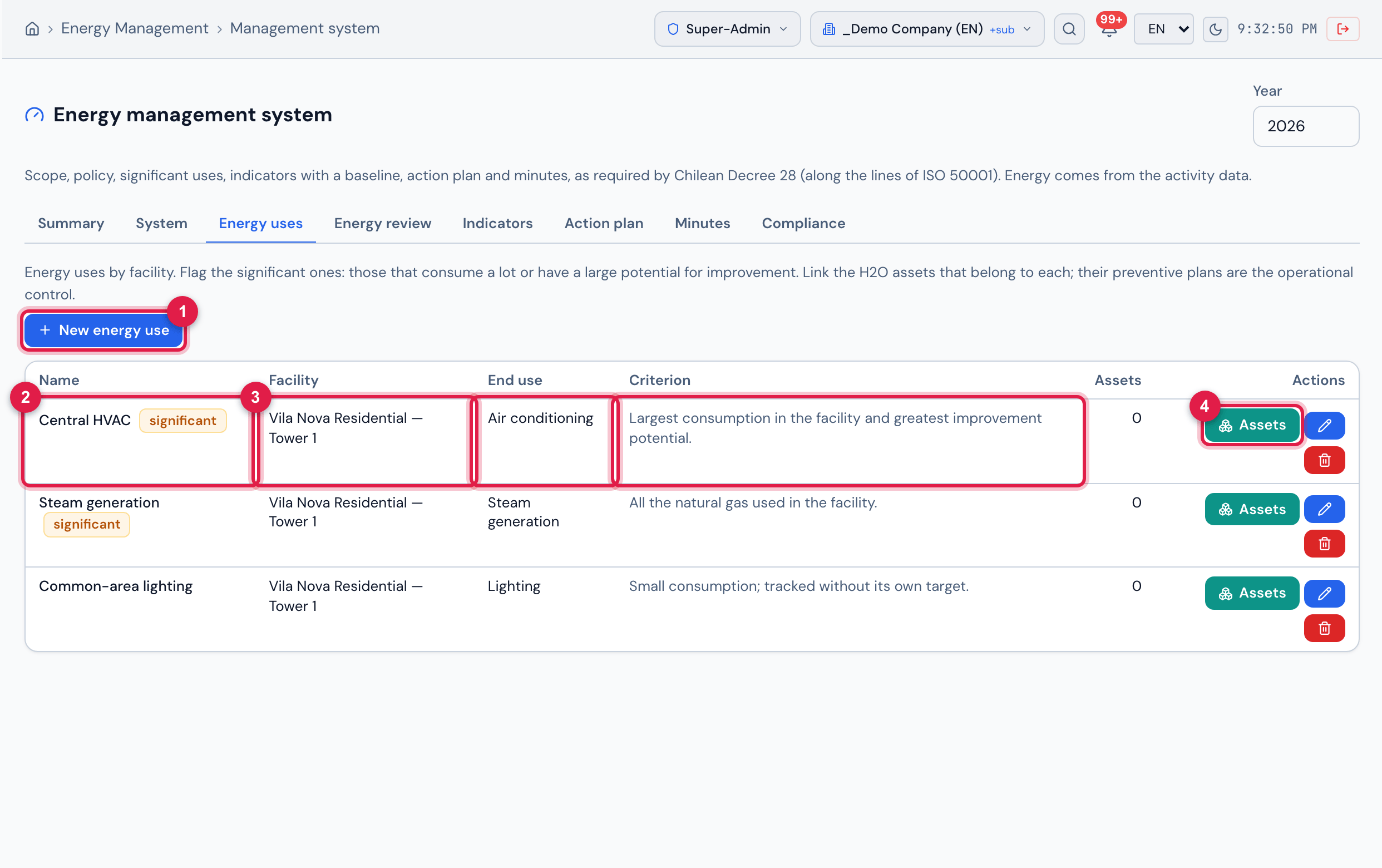
Figure 12. The Energy uses tab.
- 1New energy use.
- 2The name and the significant tag.
- 3The facility, the end use and the Criterion that justifies the classification.
- 4Assets links the H2O equipment that belongs to the use.
- Click New energy use and choose the facility.
- Give it a name and set the Main energy carrier and the End use.
- Tick Significant energy use (SEU) and write the Criterion.
- Fill in the Relevant variables that influence the use, the Staff who influence the use and the Operation and maintenance criteria.
- Save and, under Assets, link the equipment.
Linking the assets connects the management system to maintenance: the preventive plans and the checklists of that equipment are the operational control of the use.
Energy review and opportunities
Section titled “Energy review and opportunities”The energy review is the annual analysis of how the company uses energy. The significant uses, the indicators and the improvement opportunities come out of it.
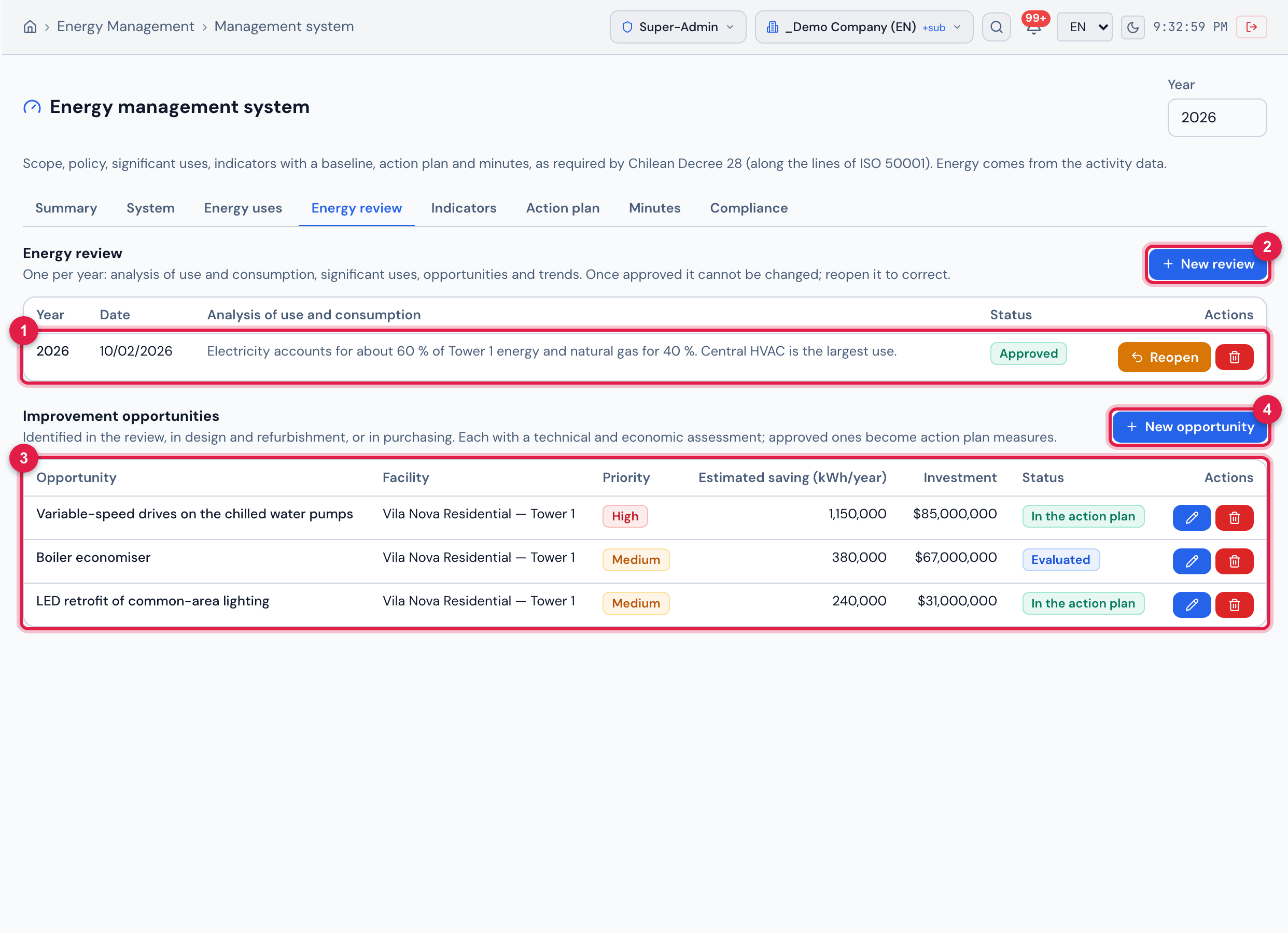
Figure 13. The Energy review tab.
- 1The year’s review, with the analysis and the status. Once approved, it cannot be changed; to correct it, Reopen.
- 2New review.
- 3The Improvement opportunities, with priority, estimated saving, investment and status.
- 4New opportunity.
| Opportunity status | What it means |
|---|---|
| Identified | recorded, not yet assessed |
| Evaluated | has a technical and an economic assessment |
| In the action plan | became a measure in the plan (chapter 7) |
| Discarded | assessed and not going ahead |
Was this page helpful?
Thanks for the feedback!
Got it — we will improve this page.