What goes into the H2O daily report?
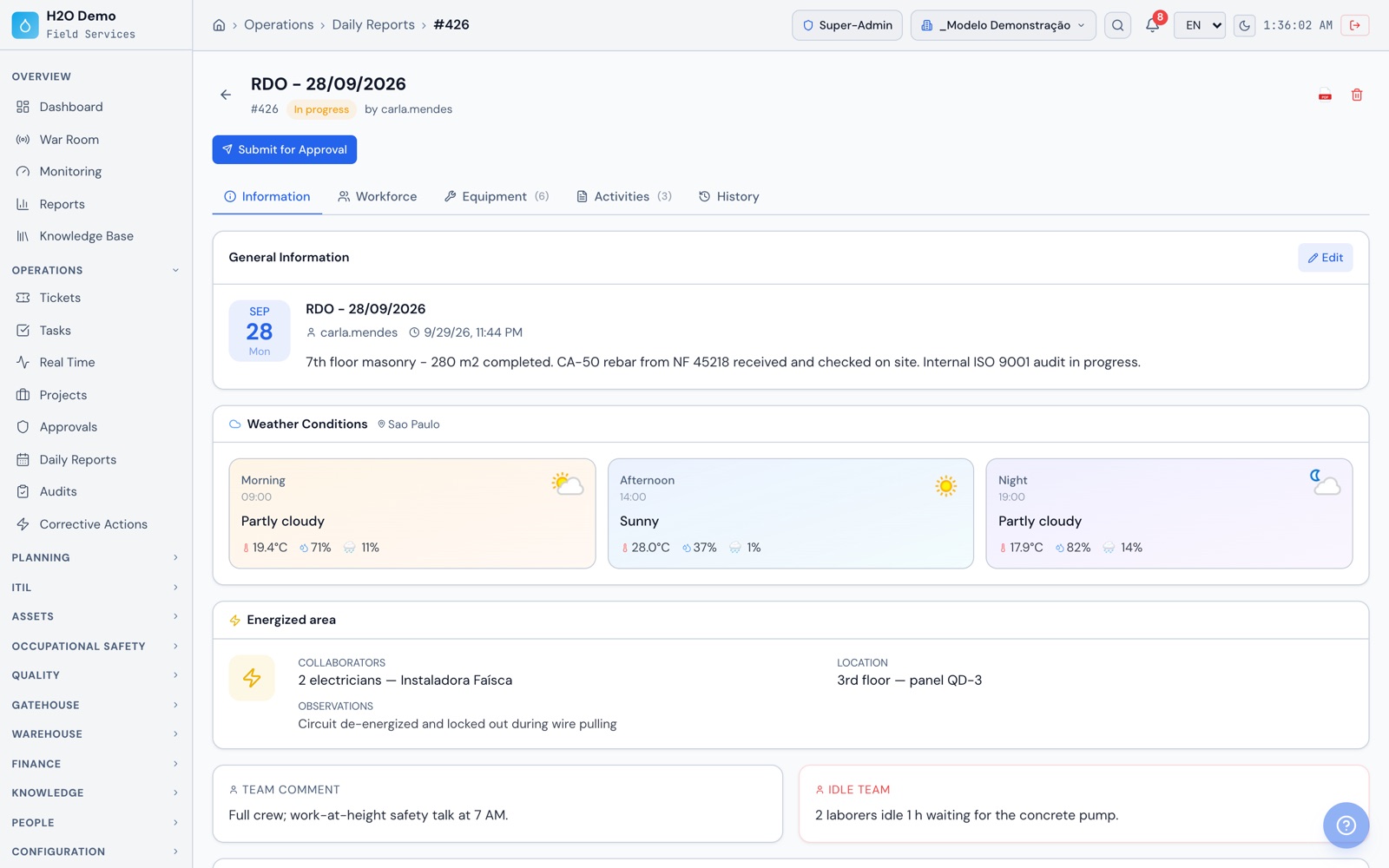
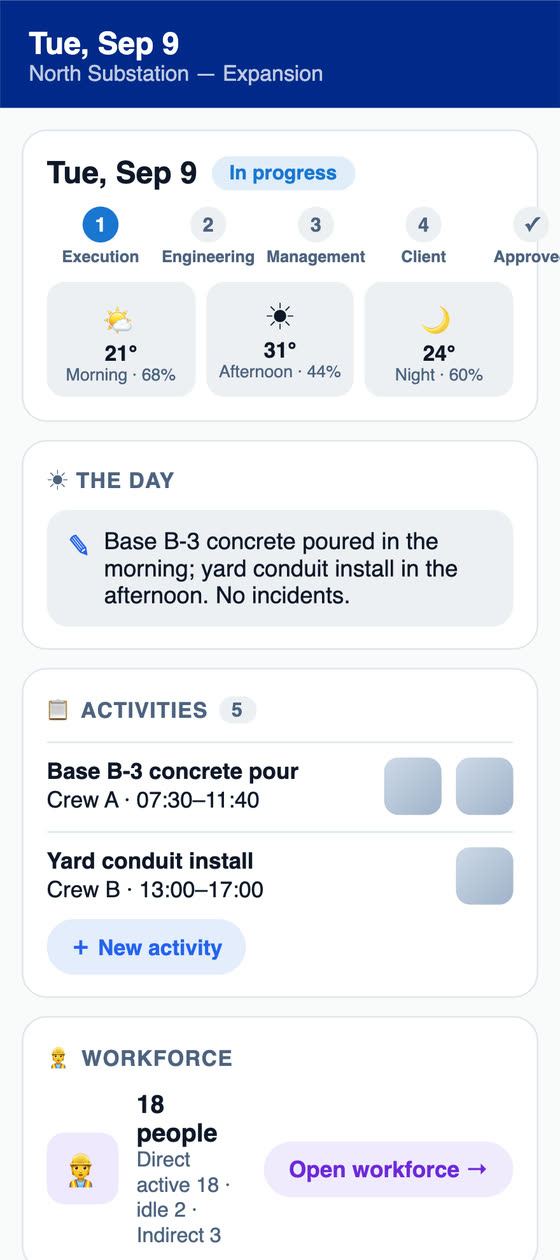
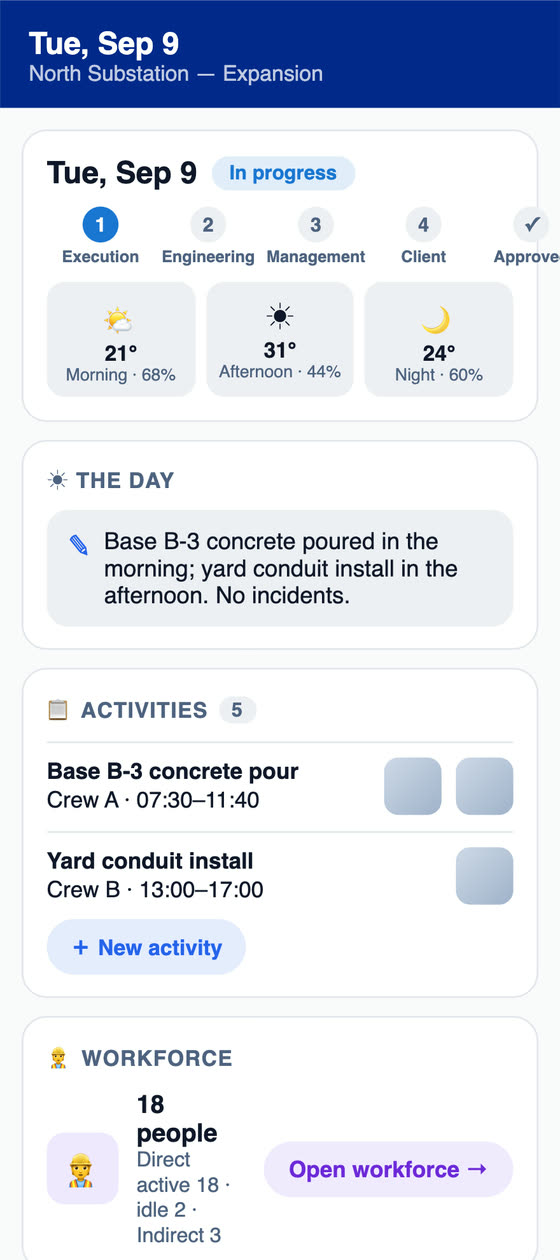
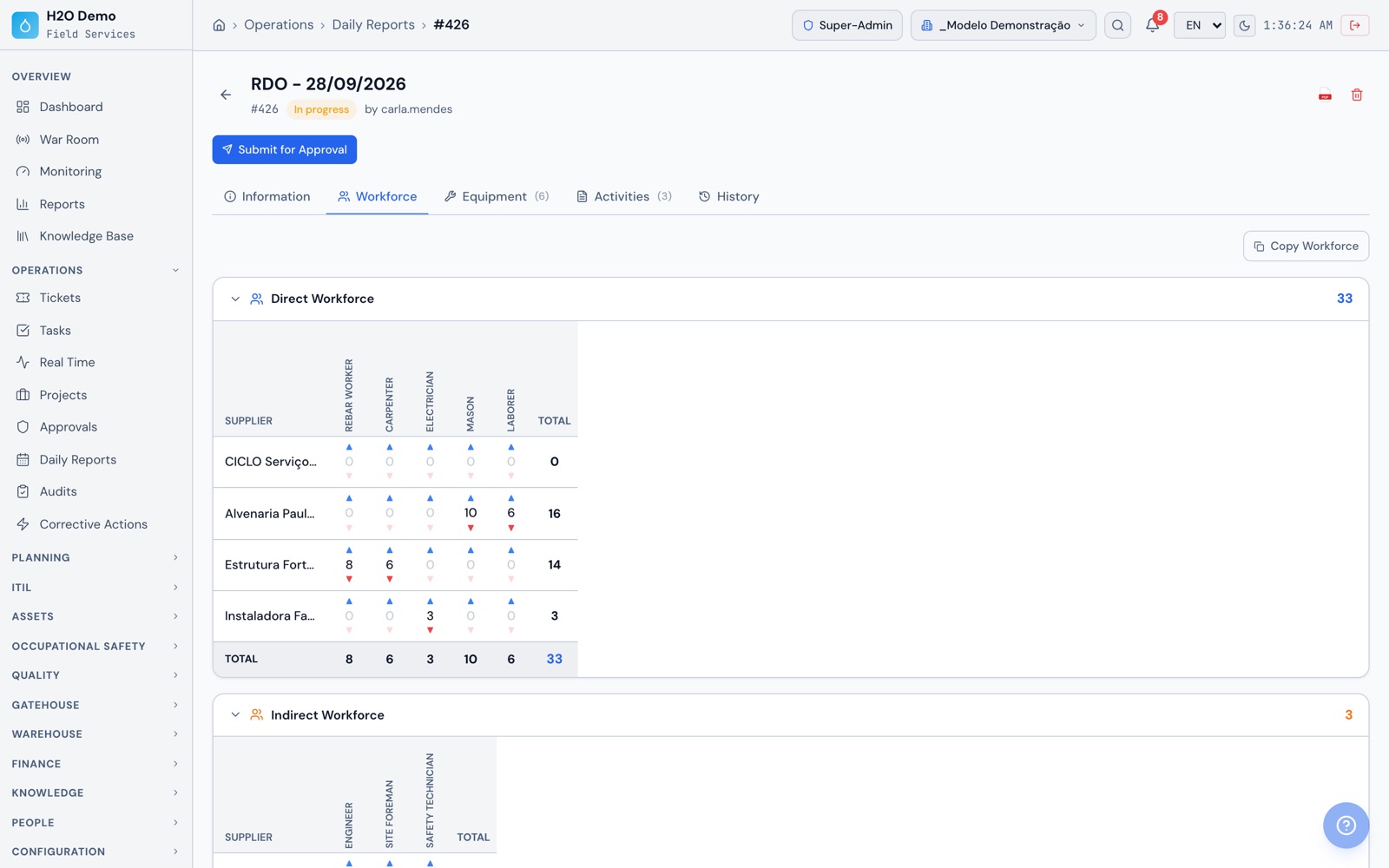
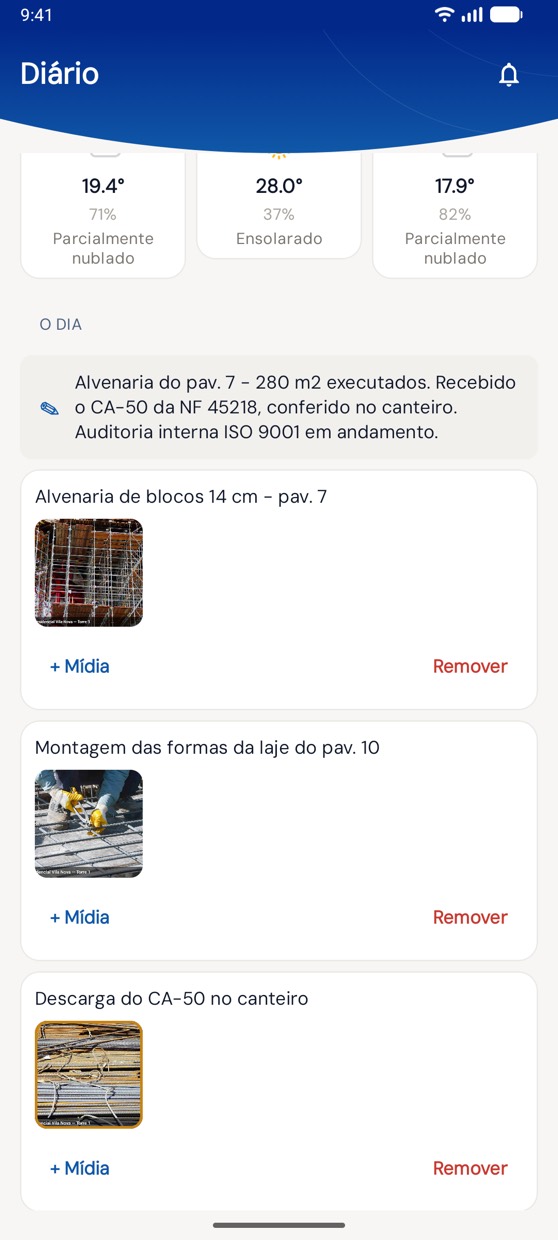
Day summary, activities and incidents with photos, videos and attachments, the day's equipment, general and client remarks, and the energized-area block, which is a safety record. Headcount is entered by role and by company, splitting direct and indirect labor, active and idle, for your own crew and each subcontractor. Weather at 9 a.m., 2 p.m. and 7 p.m. comes in automatically, with conditions, temperature, humidity and chance of rain: forecast for today and future dates, history for past dates. It uses the coordinates or city registered for the company or unit of the project. A new report can start by copying a previous day, and every change stays in the history.
How does the client or inspector approve the daily report?
The daily report moves through In execution, Awaiting Engineering, Awaiting Management, Awaiting Client and Approved, and can then be archived or reopened. The order is always engineering, management and client, and the engineer can approve directly. Each approver signs with the digital signature stored in their profile, and a rejection records the reason. The inspector approves with their own H2O user, with that permission. When the contract waives the client step, it is turned off per project. The PDF comes out with weather, headcount, photos, signatures and map, and on the web you can send up to 200 reports at once to up to 30 recipients.
How do the FVS and FVM work in H2O?
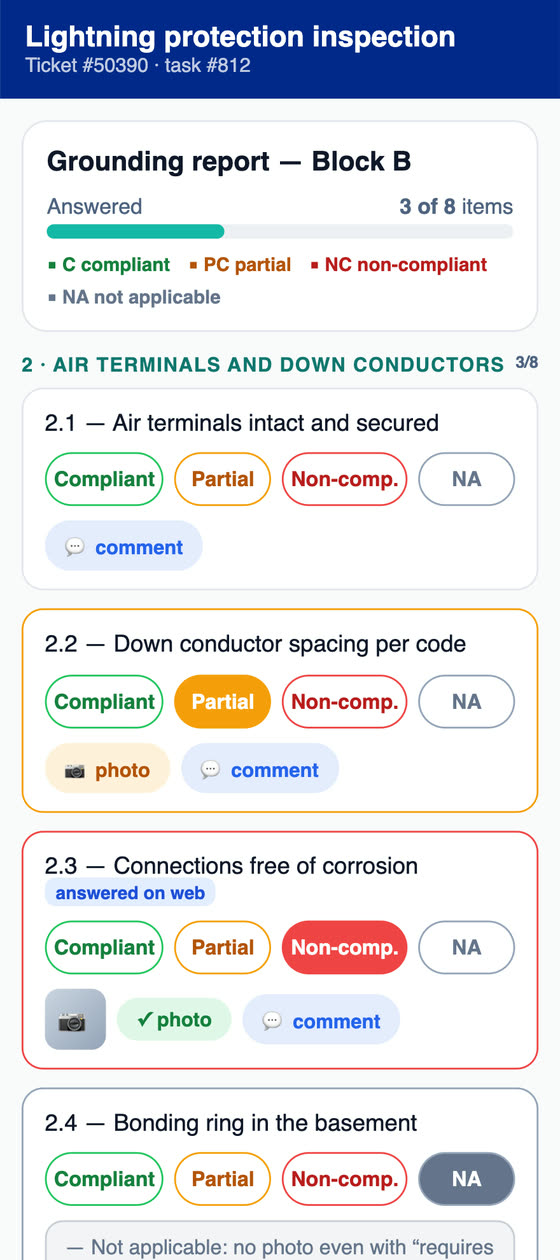
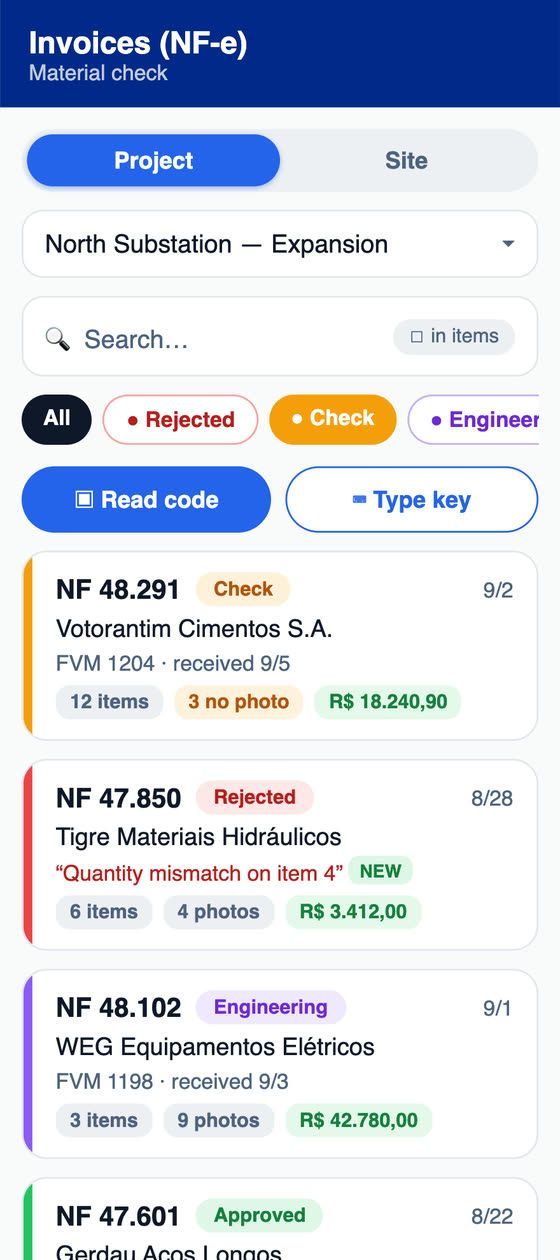
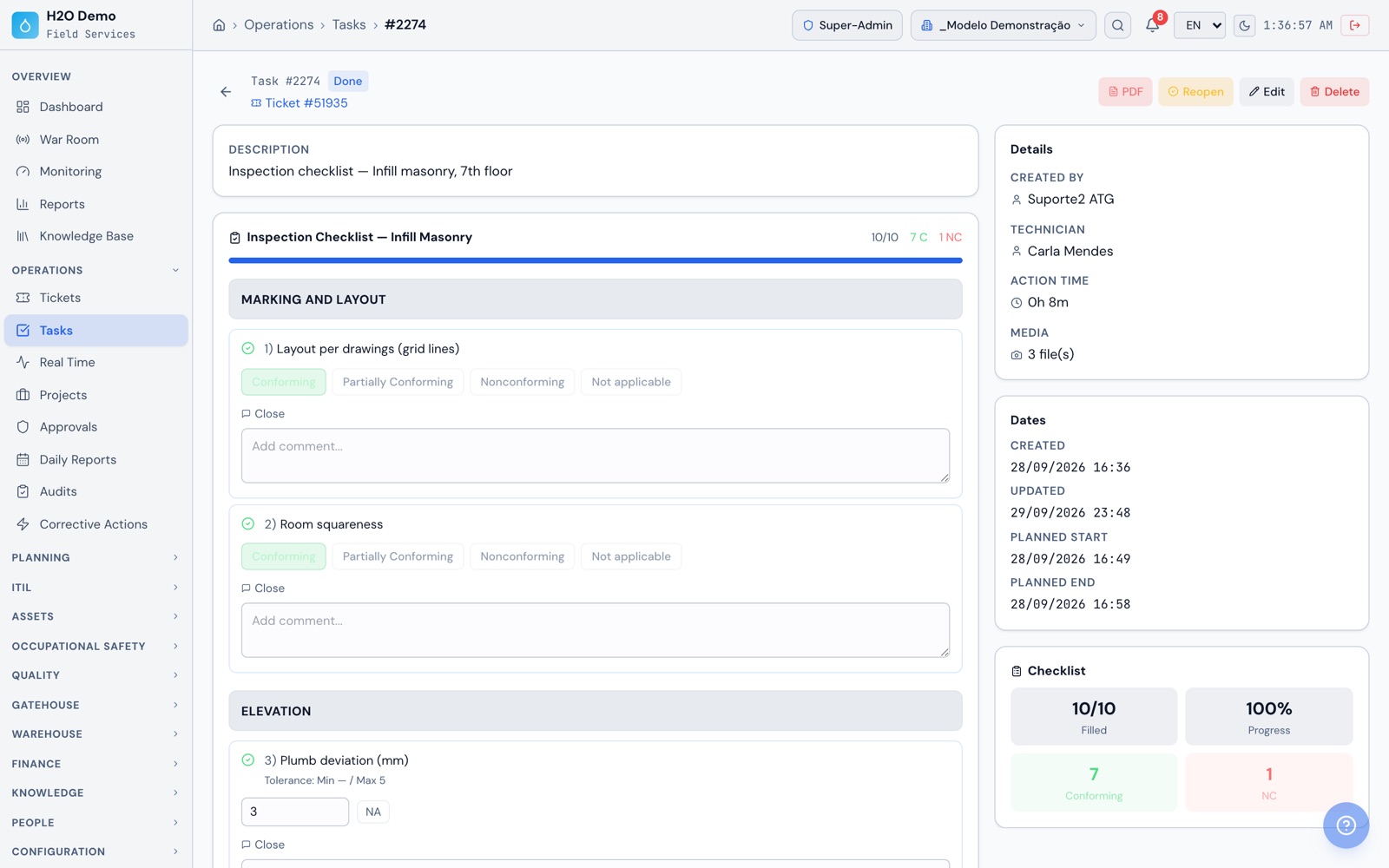
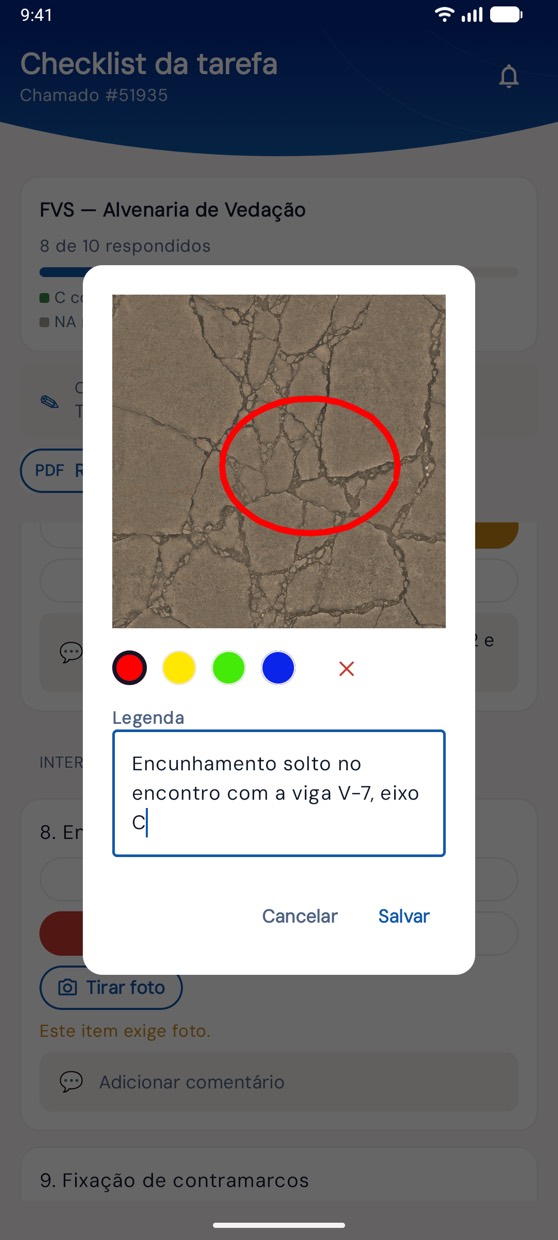
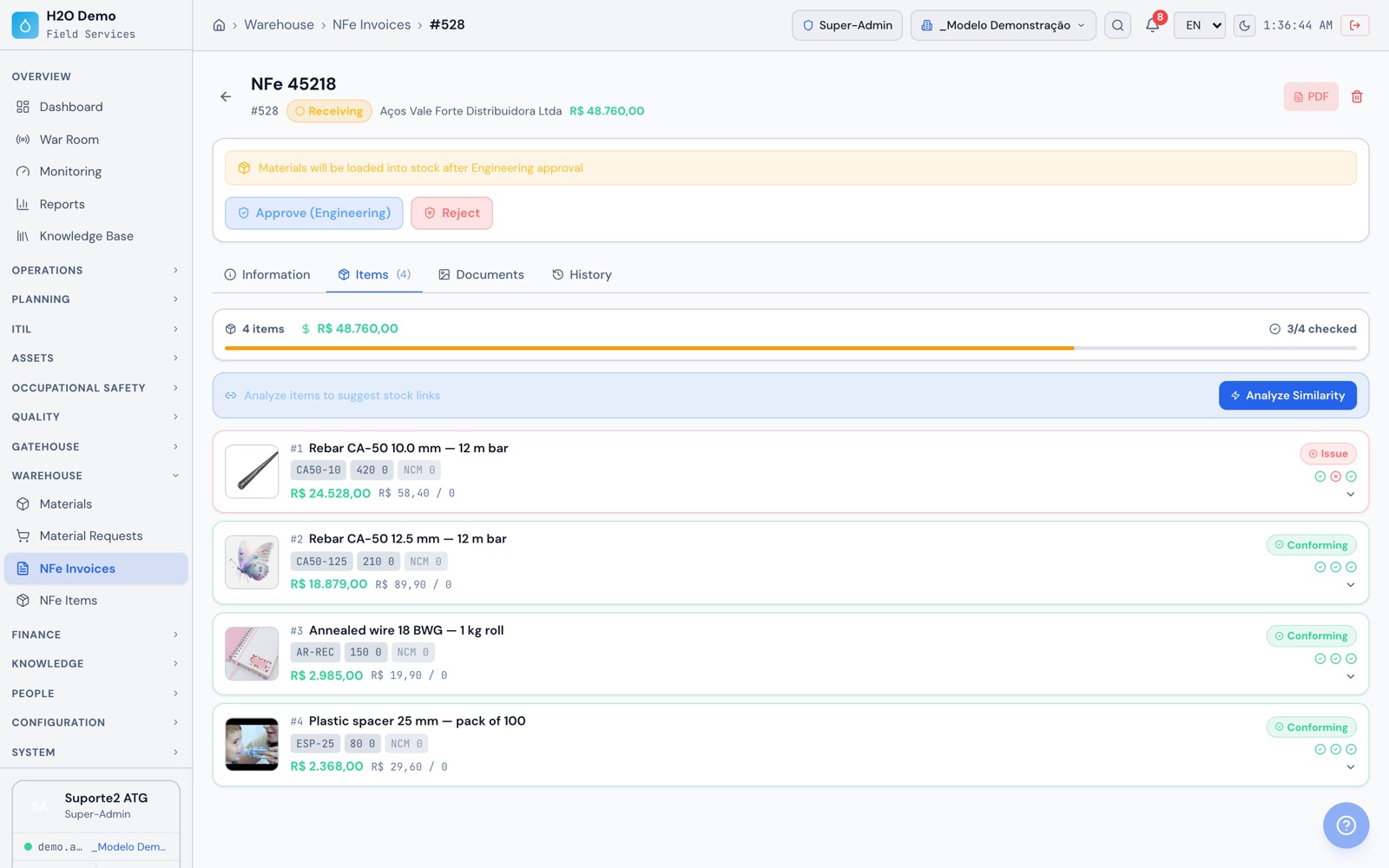
The FVS (service inspection checklist) is a checklist per service. You build the template on the web with Compliant/Partial/NC/NA, Yes/No/NA, numeric with tolerance, score, text, selection and photo items, and set which items require a photo. The crew runs it in the app with photo, drawing on the photo, comment and GPS, finishes with the signature stored in their profile and generates the PDF on the phone. The FVS can be tied to a floor and linked to the schedule task. The FVM (material inspection checklist) is material receiving against the NF-e: the invoice comes from SERPRO (Brazil's federal data processing service), each item is checked for quantity, quality and material, with photos and the invoice, purchase order and certificate documents, and the receiving report comes out in PDF with the FVM number.
Does the FVS non-conformance reach the subcontractor?
Yes, when the template is set to generate non-conformances. When the FVS is finished, on the web or in the app, the non-compliant items become NCRs, one per item or one per checklist, with the photos as the record of fact. The NCR goes to the user of the responsible supplier or stays with quality to delegate. The supplier proposes actions, quality approves or sends them back, implementation is recorded with evidence and the NCR is closed. The supplier responds with their own H2O login, and the NCR is handled on the web.
Does the AI build the FVS checklist?
Yes. You enter the service, the setting, the standard and the level of detail. Before generating, H2O shows the similar templates that already exist. The AI proposes the items with the right response type and a photo where it serves as evidence, in Portuguese with an English translation of each item. You review and save. There is a daily usage limit per user. On an FVS item, the AI also rewrites the technician's comment in technical language or builds it from the measured value, and the technician accepts or discards it. Accepted text is marked as coming from the AI.
Does the app work on a job site with no internet?
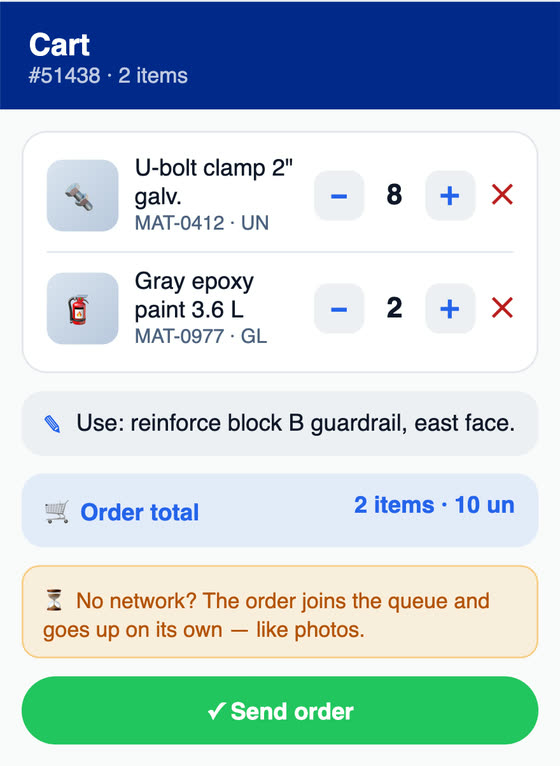
Yes. Daily reports, FVS and other checklists, safety forms, photos and signatures stay on the device and upload on their own when the network comes back, with encrypted sync. Checking an invoice already downloaded to the device also works with no signal. Registering a new NF-e, which is looked up in SERPRO, the site gate and the AI features use the internet. The app is on Google Play (Android), the App Store (iPhone and iPad) and the Microsoft Store (Windows).
Can I estimate with SINAPI and calculate BDI?
Yes. You import the months of the SINAPI database from Caixa (Brazil's federal savings bank) available on the platform and build the budget with cost compositions and inputs by state, with or without payroll tax relief, your own compositions or manual items. BDI follows the model of TCU Ruling 2622/2013. You get the spreadsheet in public bid format, the calculation report in PDF, the ABC curve of inputs, the bill of materials and the physical-financial schedule. To find a composition, you describe the service in plain Portuguese and the AI suggests codes that exist in the database, with the month's price and a confidence level. You choose the item and the quantity. If you already use OrçaFascio, there is an optional integration using your own account credentials.
How do contract measurement and the S-curve work?
The monthly measurement opens by copying the previous month or the contract baseline and brings together staff positions, costs and the SINAPI items from the linked budget, with contracted, monthly and cumulative quantities. It includes BDI, discount, the IMR deduction and a closing checklist. The workflow is draft, measured, approved and invoiced, with export to Excel and PDF, and on invoicing it generates an invoice in the contract execution. The contract execution has its own measurements with approval and remeasurement, the invoice with ISS, IR, INSS, COFINS and PIS at the registered rates, and payment records, and that is where the S-curve comes from: planned, executed, invoiced and paid, with a cash flow projection. The Gantt PDF also includes the physical S-curve, planned × actual.
Does the H2O schedule work with MS Project?
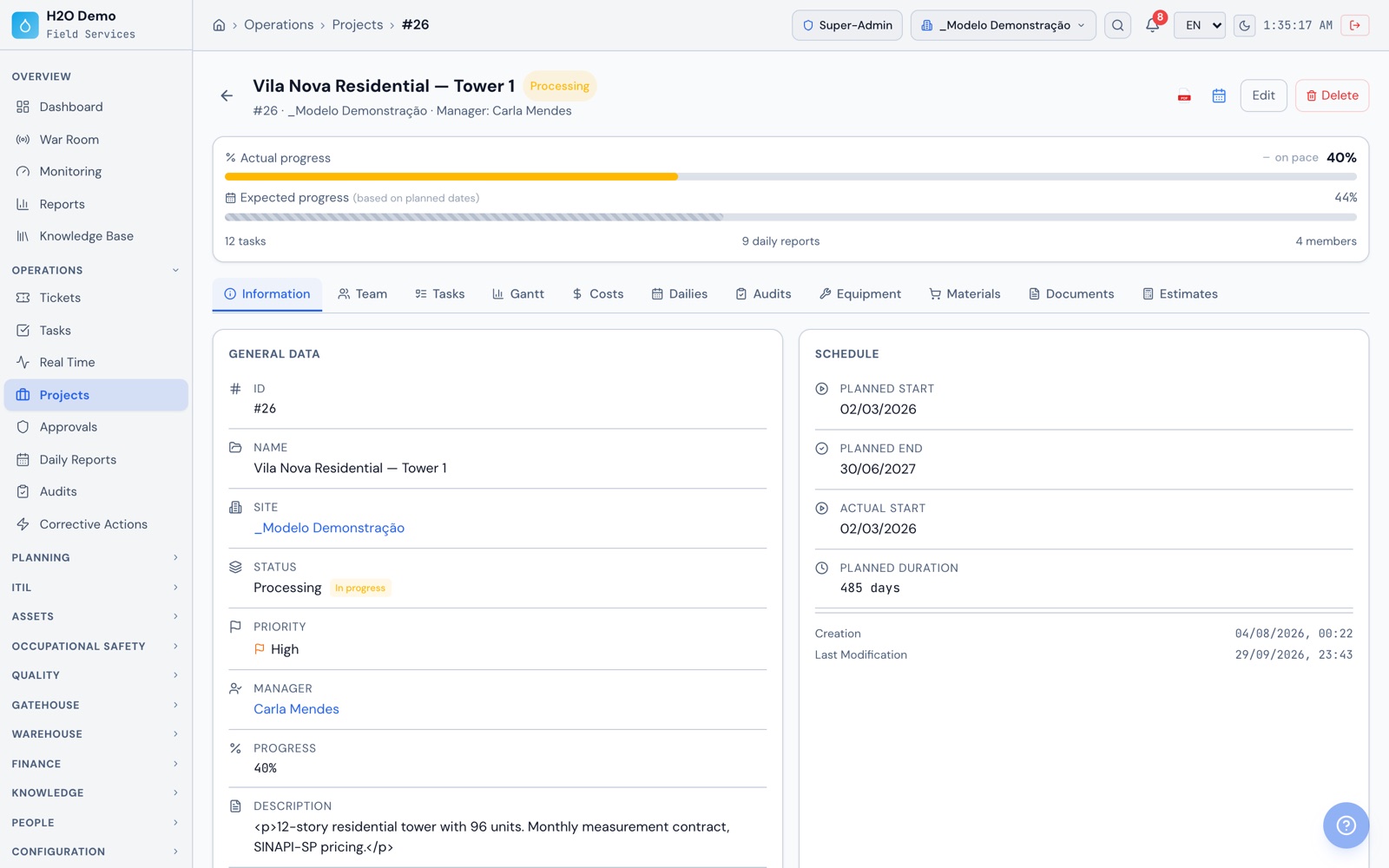
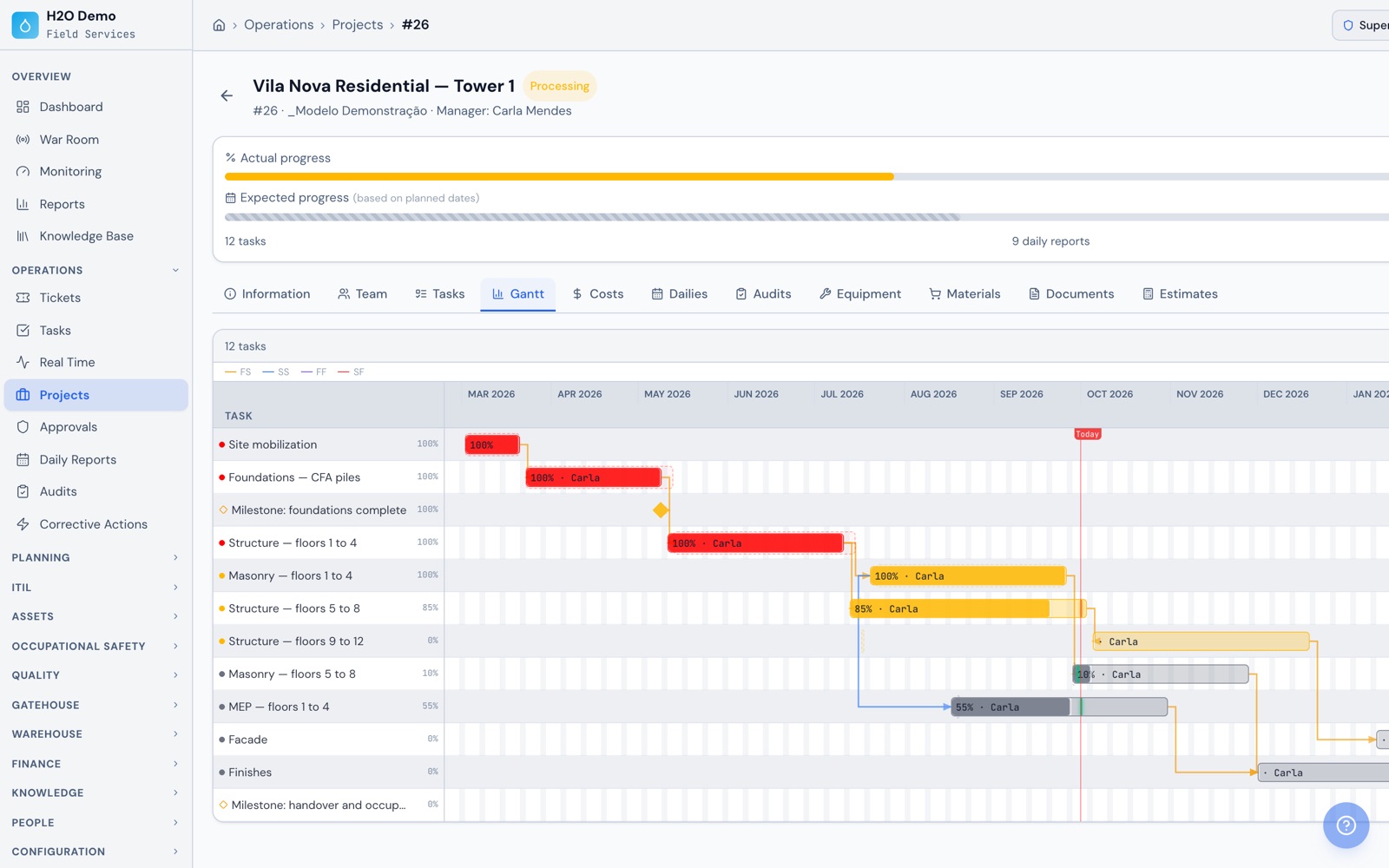
H2O exports the schedule as XML, which MS Project opens and saves as .mpp. In H2O, the Gantt has hierarchical tasks, milestones, Finish-to-Start, Start-to-Start, Finish-to-Finish and Start-to-Finish dependencies, crew per task and percent complete, including updates to several tasks at once. The Gantt PDF includes an executive summary, critical path, float, physical S-curve with SPI and the status of each task's FVS.
Does H2O handle public works and government contracts?
It covers the documents these contracts usually require: budget with SINAPI with or without payroll tax relief, BDI in the model of TCU Ruling 2622/2013, spreadsheet in public bid format and calculation report. During execution, the monthly measurement includes staff positions with CATSER code (Brazil's federal services catalog), SINAPI items with cumulative totals, the IMR deduction (results measurement instrument), change orders, index-based price adjustment and an invoice with withholdings. The daily report approved by the inspector with a signature completes the project record.
Does H2O help with ISO 9001 and PBQP-H for a construction company?
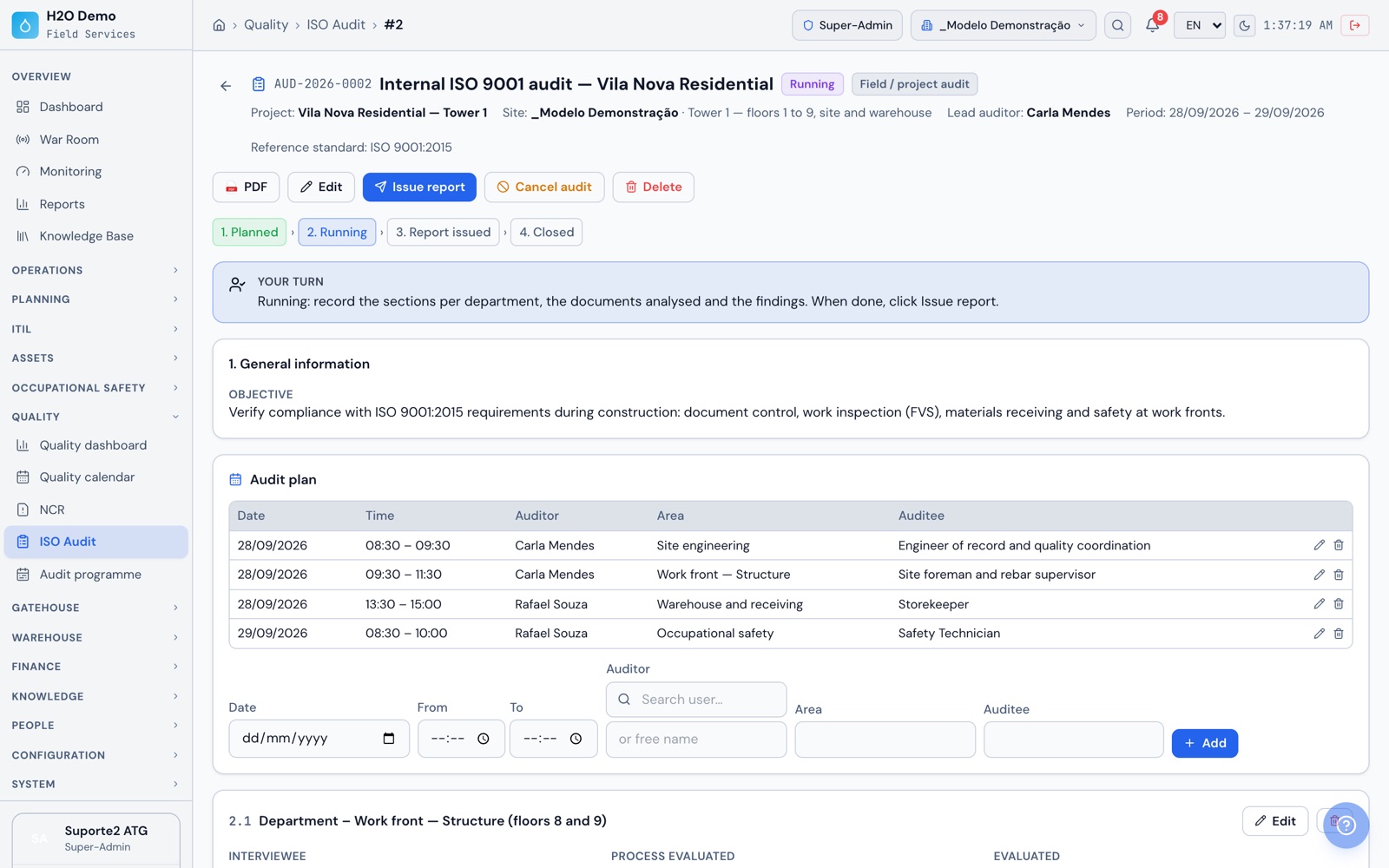
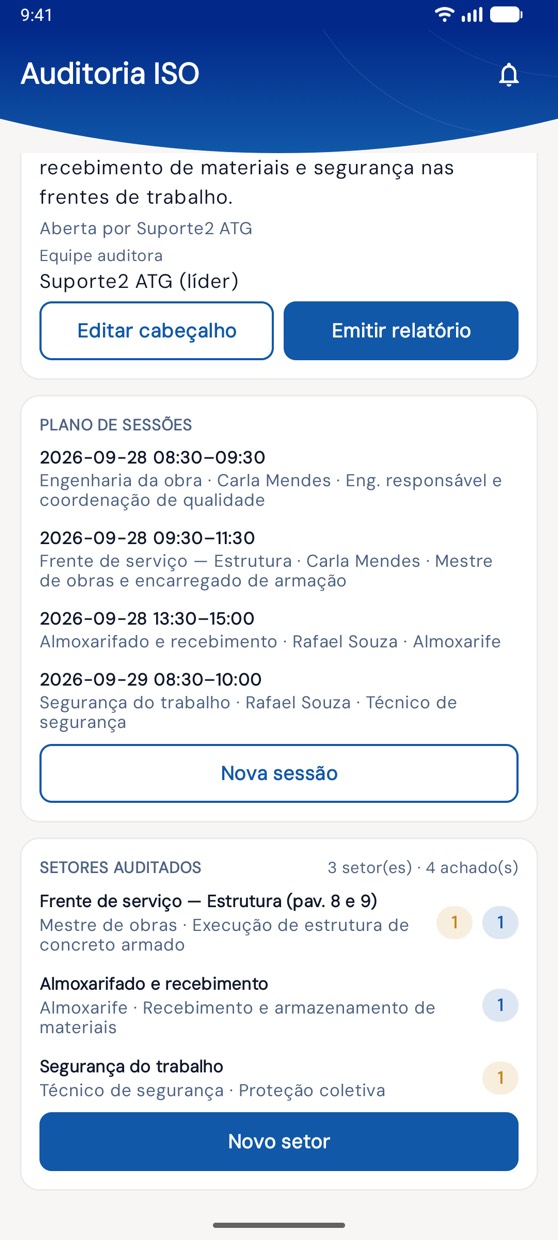
It helps gather the records the quality management system requires in one place: FVS per service with photo, GPS, signature and PDF, FVM at material receiving with the certificate attached, NCRs with corrective action and evidence, annual program and ISO 9001 internal audits with findings that become NCRs, instruments with calibration certificates and the quality dashboard. Procedures, criteria and preparation for certification (including PBQP-H, Brazil's housing quality program) stay with your team.
How do safety and the site gate work for contract workers?
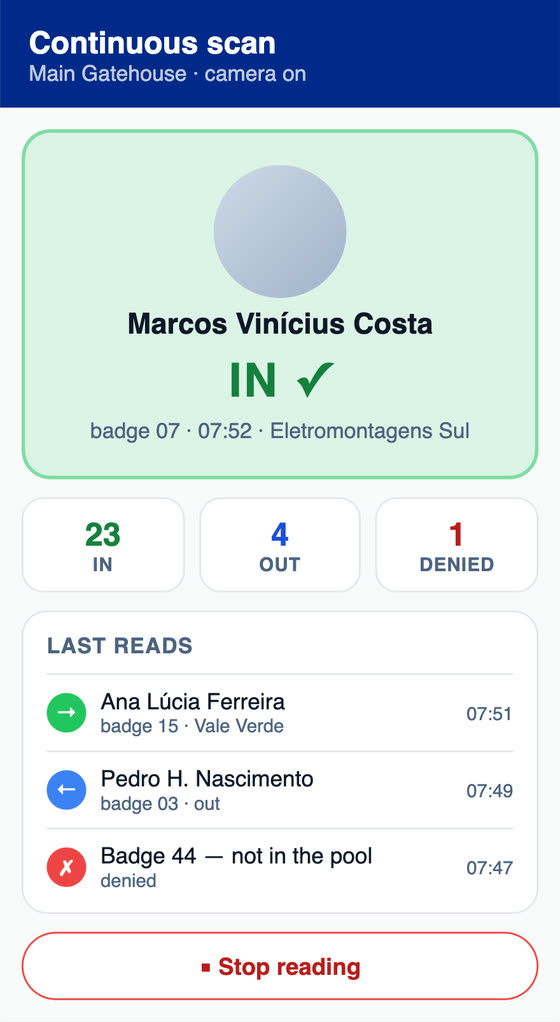
Subcontractor workers go into the records with photo, CPF (Brazilian taxpayer ID), role and company. They sign the attendance list for safety talks, onboarding and training, receive PPE with the CA number and a signature, and have a PPE record (NR-06, Brazil's PPE regulation). At the gate, they get a personal QR badge with an expiration date. On scan, the holder's photo appears and H2O denies expired or revoked badges, badges from another gate and badges of inactive workers.